.svg)


.svg)
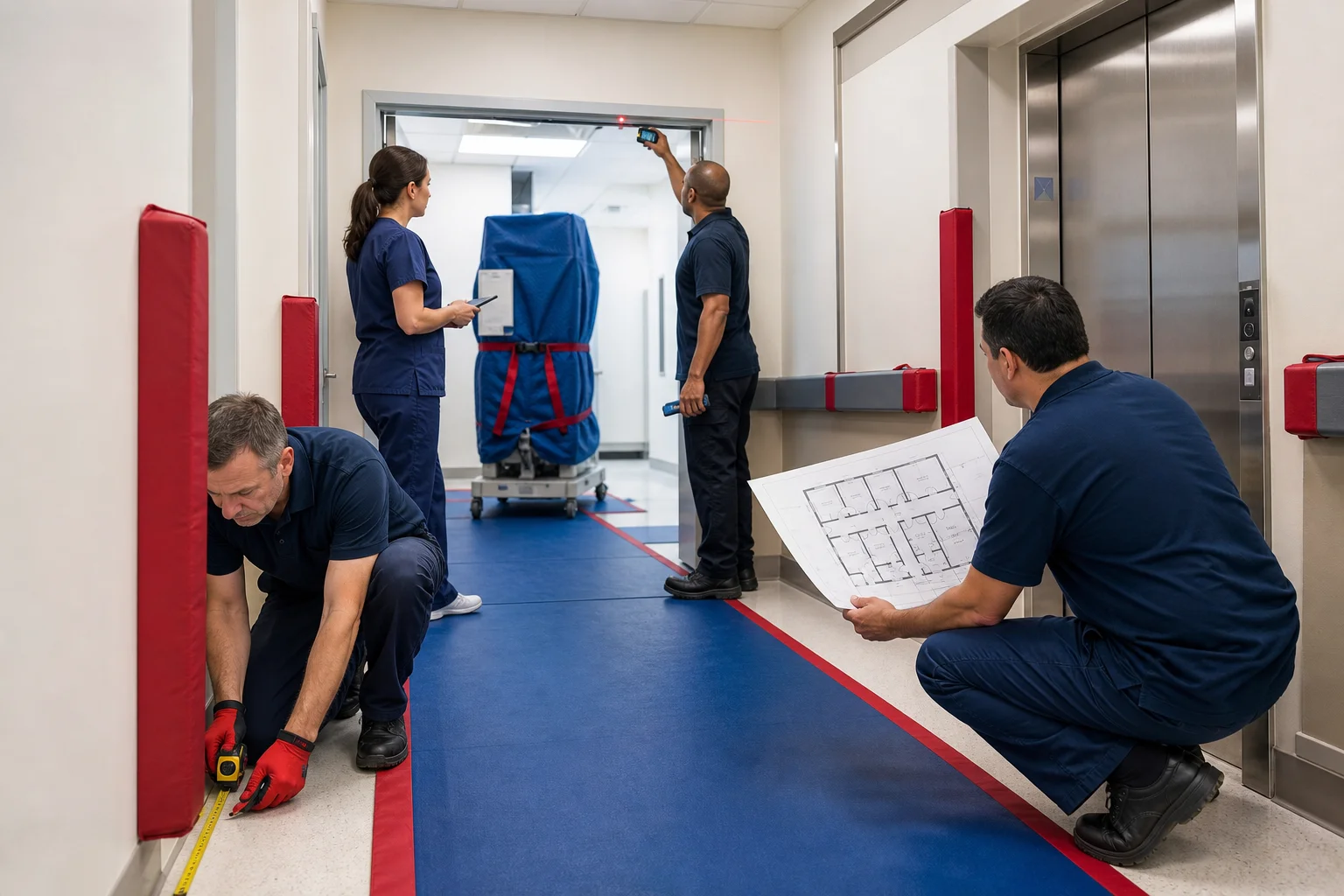
Medical equipment moving is not the same as relocating desks, chairs, or general office contents. A clinical equipment move affects patient care, uptime, safety, documentation, and the ability of healthcare teams to return devices to service with confidence.
Medical Equipment Movers Start With a Room-by-Room Inventory
A successful relocation begins before packing, rigging, or transportation. The first planning task is a complete physical inventory of the equipment being moved. This inventory should be validated by walking every room, not by relying only on an asset-management database.
The inventory creates a shared record for the healthcare facility, biomedical engineering, the OEM, and the medical equipment movers. It also helps identify which equipment will be moved, replaced, retired, refurbished, sold, or placed in temporary storage. For sensitive clinical equipment, each record should include enough detail to support safe handling and post-move verification. A strong inventory record may include:
Asset or move ID, manufacturer, model, and serial number
Current location and destination location
Dimensions, weight, and center of gravity where relevant
Condition notes and photographs before disconnection
Accessories, cables, probes, computers, manuals, and removable parts
Software dependencies, utility requirements, and calibration status
Validation status, clinical criticality, and responsible owner
The inventory should also classify equipment by importance and complexity. Patient monitors, ventilators, surgical equipment, laboratory analyzers, freezers, CT scanners, MRI systems, X-ray equipment, ultrasound systems, pharmacy automation, cleanroom instruments, and biosafety cabinets do not all move the same way.
Some devices also carry added handling concerns. The plan should flag equipment that involves radioactive sources, compressed gases, batteries, hazardous materials, biological materials, controlled substances, or protected health information. A complete physical equipment inventory helps the project team make move, storage, and retirement decisions before the schedule is locked.
OEM Requirements and Disconnect Responsibilities Must Be Defined Early
Before a relocation date is committed, each device should be matched to its OEM requirements and service-contract terms. Manufacturer instructions may control shutdown, disassembly, approved lifting points, transport orientation, shock and vibration limits, packaging, storage, reinstallation, calibration, software restoration, and acceptance testing.
This step is especially important because a move can appear successful from a transportation standpoint but still fail operationally. Equipment may arrive safely yet remain unusable if utilities are incomplete, accessories are missing, decontamination is undocumented, or the device has not been tested and released for use.
General moving labor and technical service work should not be treated as the same role
A responsibility matrix should state who can authorize shutdown, who releases the device to the carrier, who disconnects it, who reconnects it, who tests it, and who signs the return-to-service approval. This prevents assumptions during the highest-risk moments of the move.
General movers may be able to prepare equipment for handling and disconnect readily removable accessories. Technical work should be assigned to the appropriate specialists. That includes hardwired electrical systems, medical gases, chilled water, cryogens, radiation-producing equipment, MRI magnets, calibration, software, and validated laboratory systems.
For laboratory relocations, planning should account for instruments, specimens, temperature-sensitive materials, and quality requirements. A laboratory moving procurement guide emphasizes the value of structured planning when relocating research or clinical laboratory environments.
This is also where a medical equipment moving company should fit into the larger governance structure. RCS Commercial Moving & Warehousing can support the relocation scope through planning, packing, transportation, staging, storage, and placement, while the healthcare facility assigns OEM, biomedical, facilities, IT, infection prevention, and other technical responsibilities to the proper parties.
Protection, Rigging, and Site Readiness Control Moving Day Risk
Moving medical equipment safely depends on knowing the building as well as the device. A professional site survey should measure the full path from the current room to the vehicle and from the vehicle to the destination room.
The route should be checked against the largest and heaviest item, not the average piece of equipment. Doorways, corridors, elevators, ramps, loading docks, turning radii, ceiling heights, floor-load limits, thresholds, pinch points, overhead obstructions, and construction openings can all affect the plan.
Depending on the equipment and the site, the move plan may need floor protection, load-spreading plates, elevator reservations, door or frame removal, traffic control, security escorts, crane or forklift access, or structural review. Adjacent patient-care areas, sterile areas, walls, floors, and finishes also need protection.
Rigging plans should match equipment weight, geometry, and approved lift points
Large or sensitive equipment may require a written rigging plan. The plan should identify equipment weight, center of gravity, approved lift points, lifting equipment, slings, spreader bars, dollies, gantries, forklifts, cranes, exclusion zones, personnel qualifications, and emergency procedures.
Protection should also be based on manufacturer limits, not generic mover preferences. Depending on the device, protective methods may include custom wooden crates, shock-absorbing foam, vibration isolators, anti-static materials, moisture barriers, covers, desiccants, transport braces, immobilization of moving assemblies, and load-specific tie-downs.
Sensitive systems may require air-ride or pneumatic-suspension vehicles, climate control, and sealed shock, tilt, temperature, or humidity data loggers. If any sensor threshold is exceeded, the equipment should be held for review instead of being installed automatically.
Site readiness is just as important at the destination. Before equipment leaves the origin, facilities should confirm that power, emergency power, grounding, network connections, medical gases, compressed air, water, drainage, chilled water, HVAC, exhaust, shielding, fire protection, and other required utilities are installed, tested, labeled, and available.
Chain of Custody and Post-Move Verification Protect Clinical Continuity
Clinical continuity depends on more than getting equipment through the door. The move schedule should account for equipment criticality, downtime tolerance, vendor availability, and destination readiness. Each device should have a defined shutdown window, transport window, delivery window, installation sequence, commissioning period, and earliest authorized return-to-service time.
Chain of custody begins when the healthcare facility releases an asset and continues through packing, loading, storage, delivery, placement, installation, and acceptance. A useful manifest ties the move ID to the device, crate, accessories, cables, probes, computers, manuals, and removable components.
The manifest should also record serial numbers, condition, photographs, handler identity, timestamps, origin, destination, seal numbers, exceptions, and proof of delivery. If a crate is dropped, packaging is damaged, a component is missing, or a temperature or shock threshold is exceeded, the issue should trigger an exception report.
Post-move inspection should happen before crates are discarded
Receiving teams should reconcile the asset and accessory list, inspect packaging and device surfaces, compare condition with the origin report, review environmental logs, verify seals, check for loose or missing parts, photograph damage, and document exceptions. Suspected impact or environmental excursions should be escalated before the equipment is energized.
Installation should then be checked against the approved room layout and OEM requirements. The team should confirm final position, leveling, anchoring, clearances, grounding, utilities, cooling, network connectivity, shielding, software, accessories, safety interlocks, and infection-control release.
Decontamination and infection-control documentation also matter. Before a mover takes possession, the facility should determine whether equipment is clean, contaminated, potentially infectious, radioactive, chemically hazardous, or otherwise restricted. Guidance on decontamination before servicing or shipping reinforces the need to identify contamination risks and communicate remaining hazards when complete decontamination is not feasible.
Final sign-off should be item-specific. It should identify the device, serial number, destination, test protocol, results, unresolved exceptions, calibration or validation status, software and data status, responsible tester, date, and authorizing clinical or technical owner. The device should remain unavailable until all required approvals are complete.
If your organization is planning a healthcare relocation in Virginia or North Carolina, RCS Commercial Moving & Warehousing can help coordinate the moving, storage, logistics, and placement work within your broader clinical project plan. Request a Quote or call us today at (804) 358-4035.