.svg)


.svg)
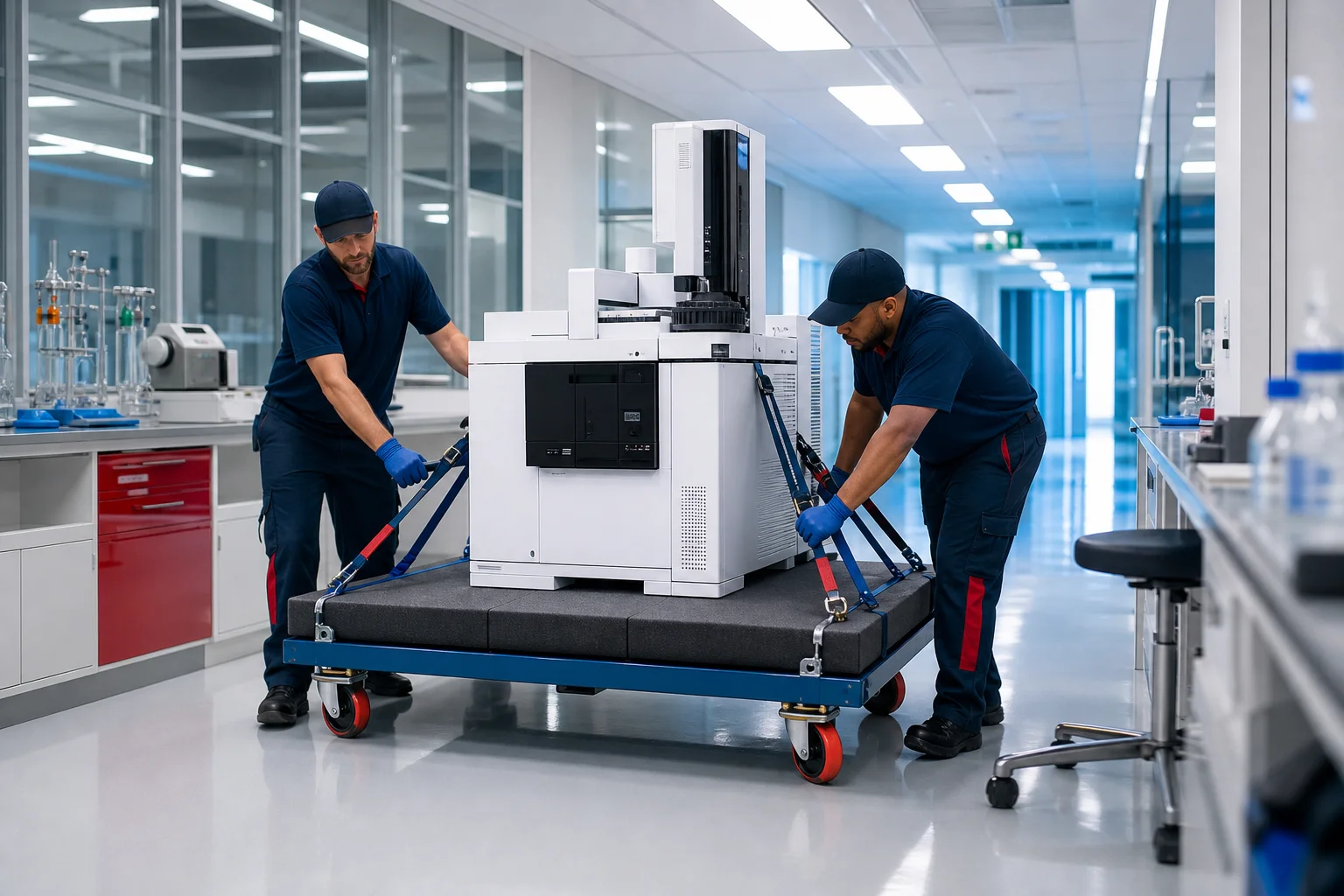
A high-value equipment lab move is not just a transportation project. It is a risk management exercise involving sensitive instruments, regulated materials, building constraints, downtime limits, documentation, and post-move validation. The safest plans start long before anything is disconnected, packed, or loaded.
At RCS Commercial Moving & Warehousing, we support commercial moving, storage, logistics, and installation needs for organizations across Virginia and North Carolina, including Richmond, Charlotte, Raleigh, Virginia Beach, Washington, DC, Roanoke, and surrounding areas. If your team has questions while planning a lab and specialized moving project, reach out to our team.
A high-value equipment lab move should begin with a risk-based plan
Pre-move planning for valuable laboratory equipment should begin with a formal risk assessment that considers financial, scientific, and operational impact if key equipment is damaged or unavailable. A freezer, analyzer, microscope, or imaging system may be expensive to replace, but its downtime can also disrupt research, clinical work, or regulated programs.
For mission-critical instruments, teams should classify each asset by interruption tolerance. Some equipment may be able to pause for several days. Other systems may need backup units, alternate locations, or a move sequence that keeps them online until the last possible moment.
A complete asset inventory is more useful than an old spreadsheet
A strong inventory should be built by walking every room and tagging assets with unique IDs such as barcodes, QR tags, or RFID. Best-practice guidance recommends capturing make, model, serial number, dimensions, weight, and sensitivity to shock, vibration, temperature, humidity, or power interruption.
Photographs are also valuable. Images of cabling, plumbing, mounting, and current placement help reduce confusion when systems are reassembled at the destination. The National Institutes of Health lab moving guidance also emphasizes planning for safe handling before laboratory equipment is moved.
Early planning should also map building logistics. Loading docks, elevator capacities, door clearances, ceiling heights, stairwells, and move routes all affect how equipment can be removed and delivered. For oversized or heavy assets, planners should confirm floor load limits, rigging points, and whether forklifts, dollies, gantries, or lift-gate trucks can safely reach each room.
Equipment sensitivity and downtime risks should determine the move method
Moving laboratory equipment safely requires more than deciding what fits in a crate. Each instrument should have an equipment sensitivity profile that defines its movement method. The profile should reflect whether the asset is sensitive to shock, tilt, vibration, temperature, humidity, power loss, or static discharge.
Electronics and precision measurement devices need particular attention. Analytical balances, microscopes, control PCs, detectors, lenses, and other delicate components may require separate packing in anti-static, shock-absorbing materials. OEM instructions should also be reviewed, because self-moving certain systems can affect warranties, service agreements, calibration status, or regulatory qualifications.
RCS often fits into the process at this stage by helping organizations coordinate the physical move, staging, warehousing, and installation details around the risk plan their lab, safety, facilities, and equipment teams have already established.
Downtime planning protects more than the equipment
Relocation planning often requires months of preparation because shutdowns need to be sequenced around active programs and workflows. Some instruments can move early. Secondary equipment may follow later. The most critical systems may need to move last, just before the new space reopens.
Before assigning move dates, teams should answer practical questions about how each instrument supports operations. These answers help determine whether standard transport, crating, OEM support, cold chain handling, regulated materials procedures, or specialized staging is needed.
Which instruments cannot be offline without interrupting research, clinical, or regulated work?
Which freezers, incubators, or sample storage systems need backup capacity during the move?
Which equipment requires manufacturer shutdown, transport preparation, recommissioning, or requalification?
Which licenses, permits, or approvals are tied to the current physical address?
Which programs must pause until calibration, validation, certification, or inspection is complete?
Regulatory downtime is just as important as operational downtime. Certain licenses and accreditations may require amendment, transfer, notification, or inspection before operations resume. A risk-based plan should identify those dependencies early so the destination lab is ready when equipment arrives.
Packing, crating, and environmental controls protect sensitive instruments in transit
High-value laboratory equipment often needs custom protection, not generic packaging. Specialist guidance recommends custom-built crates with high-density foam inserts shaped to the instrument’s geometry and weak points. This approach helps protect delicate structures and reduces movement inside the crate.
Different instruments require different preparation. Centrifuge rotors may need to be locked and buckets removed. Chromatography systems may require drained solvents, purged lines, and separately packed detectors or columns. Freezers and refrigerators may need defrosting, secured internal parts, upright transport, and temperature monitoring when conditions are sensitive.
Shock, tilt, vibration, and temperature controls should be planned before move day
Instruments that depend on precise alignment, such as mass spectrometers, microscopes, and balances, are vulnerable to rough handling and road vibration. Anti-vibration packaging, shock-absorbing foam, bracing, and external shock or tilt indicators can help reveal whether a crate experienced handling conditions that require inspection before restart.
The laboratory relocation planning guidance referenced in the research also highlights the importance of OEM transport instructions, separate packing for sensitive components, and post-move recalibration planning.
Temperature and environmental control matter for more than samples. Some instruments contain components or fluids that can be affected by temperature changes. Climate-controlled vehicles or controlled staging spaces may be appropriate for sensitive equipment, especially when there is a gap between decommissioning and installation.
Hazardous residues require additional precautions. If equipment contains residual chemical, biological, or radioactive materials that cannot be fully removed, guidance calls for secondary containment, leak-proof sealed containers, absorbent material, and clear labeling. Hazardous materials should be segregated by compatibility class and should not be moved in personal vehicles.
Safety, compliance, staging, and recommissioning complete the lab move
The physical move is only one part of a high-value equipment lab move. Before equipment leaves its current room, teams need to address decontamination, documentation, chain of custody, staging, delivery sequencing, installation, and recommissioning.
Potentially contaminated equipment, including biosafety cabinets, incubators, vivarium equipment, or devices used with hazardous chemicals, may need cleaning and decontamination before relocation, sale, or disposal. Institutions often require a certificate or sticker showing that equipment is free from hazards before movers handle it.
Chain of custody keeps assets and regulated materials accountable
Chain of custody should define who is responsible for each item at each step, from shutdown and packing through transportation, staging, installation, and restart. Asset tags, scannable IDs, and move logs help confirm that equipment and samples are not misplaced during a complex relocation.
General safety requirements also matter during packing and transport. The University of Colorado EHS guide identifies practices such as inventorying materials, using appropriate PPE, maintaining egress routes, and reducing chemical inventory before a move.
Staging and delivery sequencing can prevent congestion at the destination. Many move plans phase delivery so non-essential items go first, followed by secondary equipment, large instruments, and then mission-critical systems. Destination planning should confirm utility locations, bench loads, ventilation connections, furniture placement, and casework layout before equipment arrives.
Recommissioning turns delivered equipment back into a functioning laboratory. On arrival, instruments should be inspected, unpacked, installed according to manufacturer instructions, recalibrated, and verified. The Texas Tech EHS lab move guidance also addresses biological materials, compressed gas cylinders, chemical handling, and safe move practices.
Some systems may need field testing, certification, or documented qualification before use. Biological safety cabinets, for example, require appropriate certification after a move. Clinical, regulated, or GLP-like programs may also need documented installation qualification, operational qualification, and performance qualification before work resumes.
If your organization is planning a high-value equipment lab move in Virginia or North Carolina, RCS Commercial Moving & Warehousing can help coordinate the commercial moving, warehousing, logistics, and installation support needed around your lab’s risk plan. Request a Quote or call us today at (804) 358-4035.