.svg)


.svg)
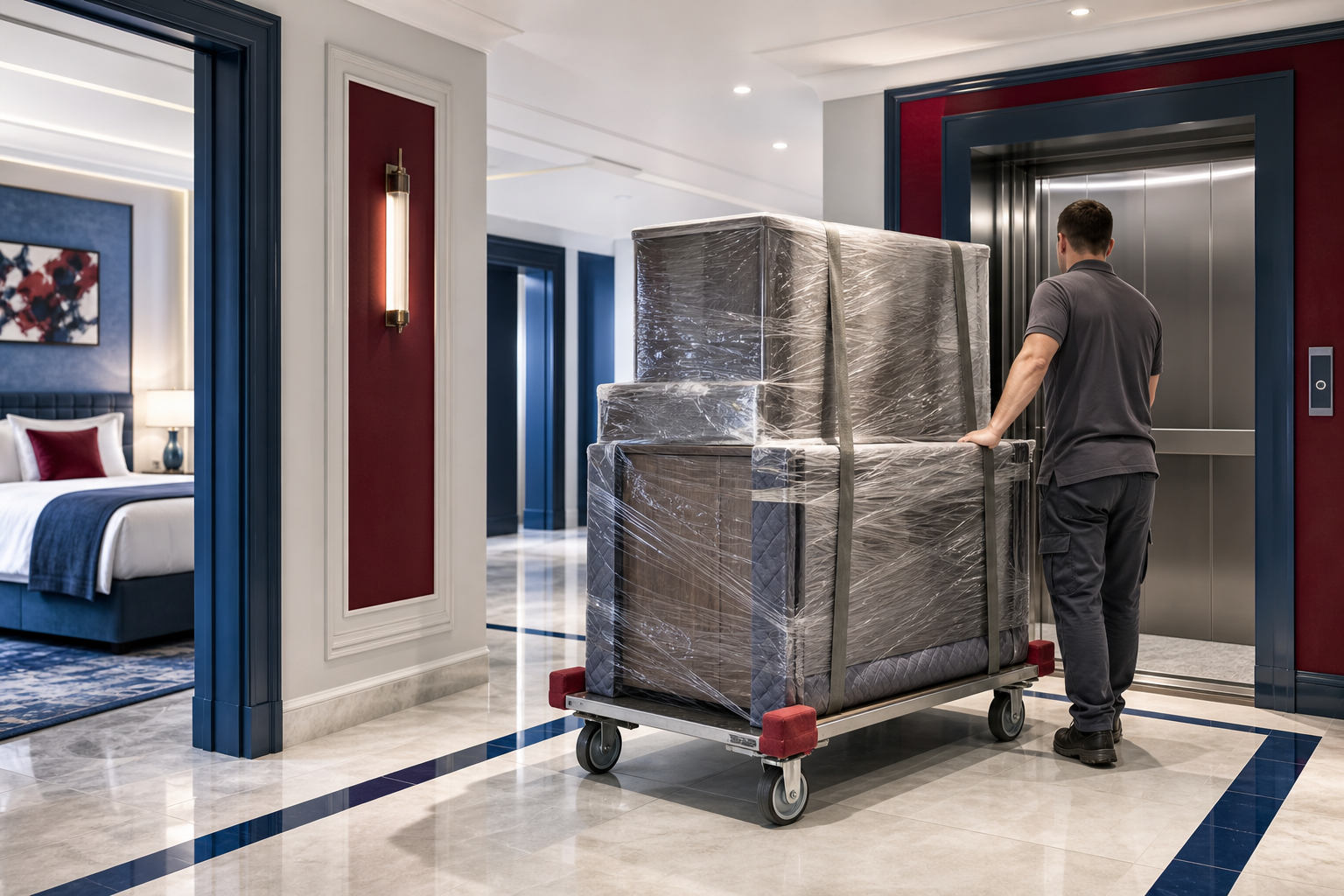
Hotel furniture liquidation works best when it is planned as part of the renovation schedule, not treated as a final cleanout. Existing FF&E needs to move out early enough for construction crews to work, while replacement furniture should arrive only when rooms and public areas are ready to receive it.
At RCS Commercial Moving & Warehousing, we help hotels and commercial properties across Virginia and North Carolina coordinate the moving, storage, logistics, and installation work that supports phased renovations. If you have questions about planning an upcoming project, reach out to our team.
Hotel FF&E Liquidation Should Follow the Renovation Sequence
A hotel renovation has many moving parts, and furniture removal is directly tied to each one. Rooms, corridors, public areas, and back-of-house spaces must be cleared at the right time so the general contractor can begin work without losing access or schedule momentum.
Occupied hotels often phase renovations by floor, wing, room type, public area, or operating function. Each phase should be isolated, deinstalled, cleared, inspected, cleaned, and accepted before the next phase begins. A practical turnover sequence may include a pre-condition survey, deinstallation, removal, construction, room preparation, replacement FF&E delivery, installation, punch list, brand inspection, housekeeping release, and handoff to hotel operations.
The key is to measure progress in rooms returned to inventory, not just truckloads removed. A 40-room floor, for example, may need to be broken into smaller blocks so beds, case goods, seating, televisions, lighting, and accessories are removed during approved work windows.
A room-level removal calendar protects the operating hotel
A strong removal calendar should match contractor mobilization dates and hotel operations. It should account for elevators, docks, service routes, guest paths, housekeeping access, dust containment, noise restrictions, and daily truck appointments.
For an active hotel, work zones should be physically separated from guests and staff. Noisy, dusty, or odor-producing tasks should be scheduled during approved low-impact periods so unaffected rooms and amenities can remain in service.
A Detailed Asset Inventory Determines What Can Be Sold, Donated, Stored, Recycled, or Disposed
The first step in hotel furniture liquidation is a detailed asset inventory. This inventory should include guest rooms, corridors, meeting areas, restaurants, lobby spaces, administrative areas, kitchens, laundry, maintenance spaces, loading areas, and other back-of-house locations.
Each record should identify the asset category, quantity, room or location, manufacturer, model, dimensions, age, finish, condition, ownership status, damage, completeness, and photographs. A documented baseline condition survey before contractor access is especially useful because it separates pre-existing damage from renovation-related damage. For a broader look at how inventory fits into project coordination, see what FF&E services include.
Guest-room inventories usually include beds and mattresses, headboards, nightstands, desks, dressers, wardrobes, luggage benches, chairs, sofas, lamps, mirrors, artwork, draperies, televisions, refrigerators, safes, and accessories. Public-area inventories may include sofas, lounge chairs, tables, reception desks, lighting, decorative fixtures, artwork, signage, planters, and meeting-room equipment.
Back-of-house assets can be just as important. Commercial kitchen equipment, shelving, carts, laundry equipment, office furniture, lockers, refrigerators, freezers, maintenance equipment, and electronics may all need separate handling decisions.
Resale value depends on condition, consistency, and handling cost
Matching room packages generally sell more effectively than mixed individual pieces because buyers can acquire consistent beds, case goods, lighting, or seating. Potential buyers may include another hotel, apartment project, student-housing property, shelter, or furnished housing program.
Items should be graded before marketing begins. Useful categories include new or like-new, good reusable condition, repairable, parts-only, recyclable, and disposal-only.
The inventory should also identify restrictions. Permanently installed fixtures, leased equipment, branded materials, artwork, guest data devices, fire- or life-safety equipment, refrigerant appliances, mattresses, and items subject to health or regulatory requirements may require owner approval or specialized handling.
A Practical Disposition Plan Routes Each Asset Before Removal Begins
A useful disposition hierarchy starts with retaining or relocating items internally, then moves to resale, donation, refurbishment or repurposing, recycling, and final disposal only when other options are not practical. The earlier this plan is made, the easier it is to avoid unnecessary hauling, storage, and landfill use.
The U.S. EPA recommends source reduction, salvage, reuse, recycling, and purchasing used or recycled materials as ways to reduce renovation and construction disposal through sustainable construction debris management. For hotel projects, those principles apply to furniture, fixtures, appliances, lighting, shelving, and related FF&E.
Resale candidates should be cleaned, photographed, measured, counted, and grouped into buyer-ready lots. If the owner’s priority is speed rather than maximum price, a guaranteed removal date or bundled sale may be more valuable than a longer on-site auction process.
Donation is appropriate for clean, safe, usable furniture, appliances, electronics, linens, and equipment when an accepting organization can confirm quantities, pickup windows, acceptance criteria, tax-receipt procedures, and chain-of-custody records. Host Hotels reported donating nearly 10,800 furniture pieces that supported approximately 2,500 local families during renovation projects.
Recycling should be organized by material and product type rather than treating every item as mixed waste. Metals, wood, cardboard, glass, plastics, and selected fixtures may have recovery outlets. EPA identifies metals as valuable recyclable commodities and notes that wood can become engineered-wood products, mulch, or other materials.
Some materials require extra planning. Mattresses, upholstered pieces, carpets, large appliances, electronics, and furniture can be hard to handle or hard to recycle. Refrigerators, freezers, air-conditioning units, and dehumidifiers may require qualified refrigerant handling, while electronics should not automatically enter ordinary waste streams.
Warehouse, Cross-Docking, and Documentation Keep the Renovation Handoff Moving
A commercial moving provider should begin with a site survey and logistics plan. The plan should identify room counts, floor sequence, elevator capacity, dock rules, loading hours, parking, staging areas, security requirements, labor needs, protective materials, and contractor handoff dates.
That plan should also separate deinstallation labor from hauling, resale loading, donation pickups, recycling shipments, temporary storage, and final disposal. Crews can then work room by room or zone by zone, photograph condition, label components, protect finishes, wrap furniture, remove items through designated service paths, and reconcile quantities against the inventory.
Transportation choices should match the asset’s destination and the project timeline
Direct shipment is useful when a buyer or donation recipient is ready, and the hotel needs immediate clearance. Warehousing is useful when resale, donation, replacement-property use, or project timing is uncertain. Cross-docking is useful when outgoing assets can move from a hotel or inbound truck directly to an outbound buyer, charity, recycling vendor, or second property with little or no storage time.
For incoming replacement FF&E, warehouse receiving can prevent premature delivery into active construction areas. Shipments can be received, inspected, photographed, inventoried by property, floor, room type, or phase, and released only in the quantities required for the next turnover block.
Documentation is what turns liquidation into a controlled handoff. Each room or zone should have a clear status, such as pre-condition, in progress, ready for FF&E, punch list, brand check, and handover. A shared turnover matrix should identify who releases each room, who receives removed assets, who approves disposition, who controls keys and access, who signs delivery documents, and who accepts the finished room.
Closeout records should include before-and-after photographs, removal counts, damage reports, delivery receipts, installation status, missing-item reports, punch-list items, donation records, recycling and disposal documentation, warehouse balances, and unresolved exceptions. Host Hotels has reported renovation projects with diversion rates ranging from 73% to more than 95%, including recycling, reuse, donation, and furniture liquidation.
Renovation also creates a large waste-management opportunity. EPA estimated that the United States generated 600 million tons of construction and demolition debris in 2018, which shows why separating usable furniture and recoverable materials before they reach mixed waste is so important.
If your hotel renovation requires FF&E removal, storage, cross-docking, liquidation, disposal, or installation support, RCS Commercial Moving & Warehousing can help you build a plan around the renovation handoff. Get a Quote, Call us today at (804) 358-4035, or Email us at contact@rcsmoving.com.