.svg)


.svg)

FF&E services help businesses manage the furniture, fixtures, and equipment that must be received, stored, delivered, and installed before a commercial space can open or turn over. For renovations, relocations, buildouts, tenant improvements, and new construction, this requires more than moving products from one location to another. It requires a coordinated process connecting vendor shipments, warehouse control, site readiness, installation sequencing, and final placement.
FF&E services coordinate furniture, fixtures, and equipment from purchase order to turnover
FF&E logistics is the coordinated process of receiving, warehousing, staging, delivering, and installing furniture, fixtures, and equipment. Unlike basic freight handling, FF&E services bring multiple vendor shipments together under one project plan.
That coordination matters because commercial projects rarely receive everything at once, and the site may not be ready for immediate installation. Furniture can arrive while construction continues, fixtures may be needed by floor or room block, and equipment may require storage until a specific phase is ready. Without a coordinated plan, products can arrive too early, become misplaced, or create jobsite congestion.
FF&E can include casegoods, seating, lighting, soft goods, artwork, loose equipment, fixtures, and similar commercial assets. Services commonly include project planning, receiving, consolidation, warehousing, sequenced delivery, installation coordination, final placement, and punch list support. Together, these services manage the process from vendor shipment to room-by-room placement for offices, hospitality spaces, retail projects, renovations, relocations, and new construction.
Some projects may also require coordination for the removal or responsible disposition of existing furniture and equipment. The exact scope depends on the facility, schedule, products, and responsibilities assigned to the logistics provider. Defining those responsibilities early helps the client, vendors, warehouse team, and installers work from the same expectations.
FF&E planning turns vendor flow and site constraints into a release schedule
A strong FF&E process begins with planning. The project team aligns vendor shipments, access restrictions, staging needs, and installation milestones with the client’s schedule. The goal is to determine what is coming, when it is expected, where it belongs, and when the site can accept it.
FF&E providers may coordinate with general contractors, designers, ownership teams, and purchasing teams so arrivals, shortages, damage, and installation priorities remain visible. Floor plans, room matrices, and phase schedules establish where each item belongs and when it should be released. Rather than relying only on a carrier’s delivery date, the logistics team can connect inventory to a room, floor, installation sequence, kit, or project phase.
Planning should answer several practical questions before products begin moving:
Which vendors are shipping product, and what purchase orders or line items are tied to each shipment?
Which items belong to each phase, floor, room, department, or area code?
Which site areas will be ready first?
What access limits, dock constraints, or construction milestones affect delivery timing?
How should goods be staged so installation crews can work in a logical order?
Answering these questions creates a clear connection between purchasing, warehousing, delivery, and installation.
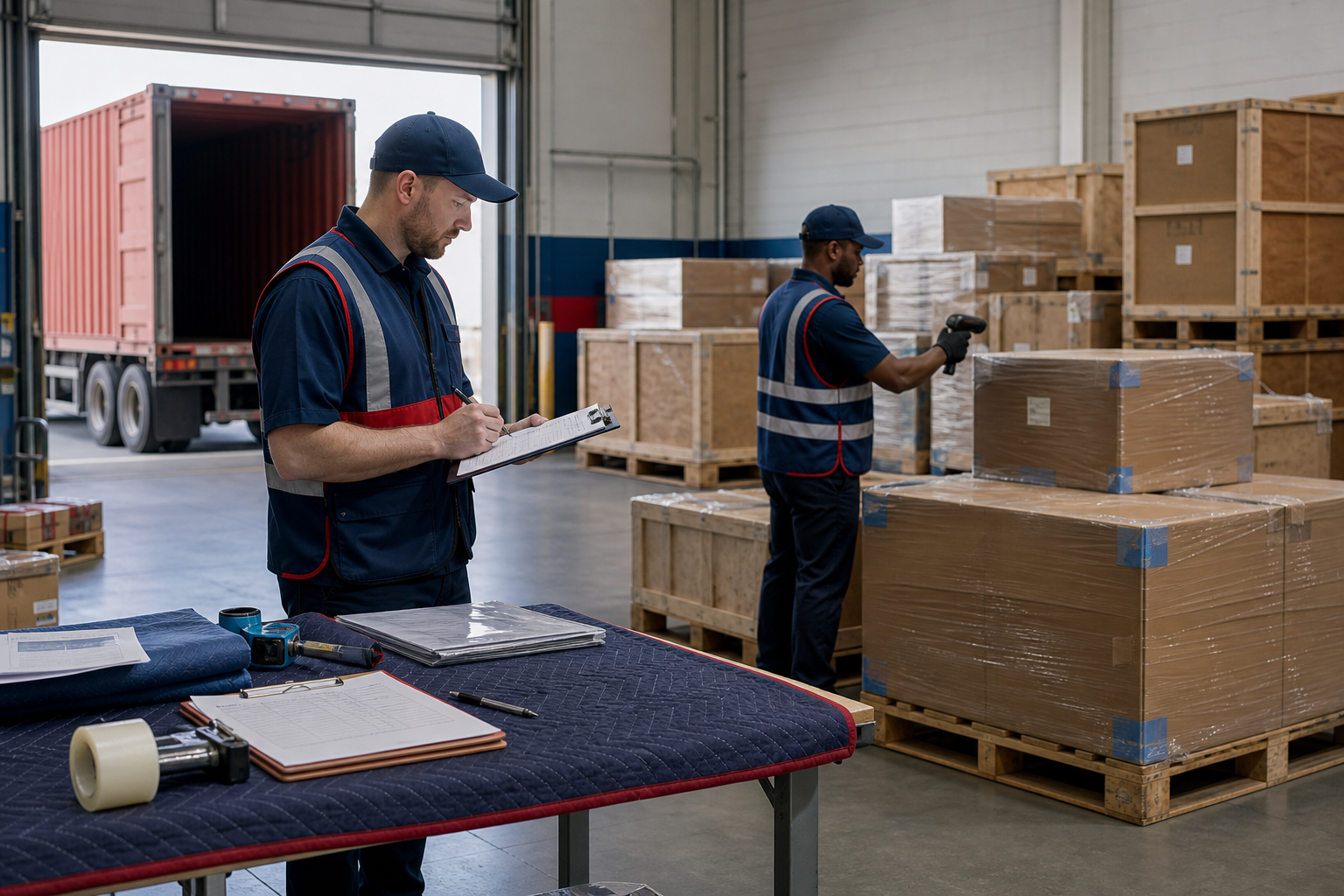
Receiving and inspection create the inventory record that keeps FF&E projects accountable
Receiving is a critical control point in FF&E services. The warehouse team accepts shipments against the project record, checks them against purchase orders or bills of lading, and documents what arrived. Cartons and crates are counted, item identities are verified, and visible damage or discrepancies are recorded before products enter storage.
Depending on the project, the team may photograph cartons and individual pieces, record quantities and condition notes, and open or sample-inspect items. Software built for FF&E warehouse management may support item tags, condition notes, photographs, exception records, held quantities, and quarantine locations.
This documentation is especially valuable when projects involve many vendors and destinations. If an item is damaged or missing, the team needs to know before installation is scheduled. Discovering the issue on placement day can result in delays, substitutions, incomplete rooms, and additional trips.
Linking each item to a project code, purchase order, room, floor, or phase also gives project managers visibility into what has arrived, what remains outstanding, and what is ready for release. Accurate receiving records support every later stage of the FF&E process.
Early documentation also supports faster decisions. When a shortage or damage report is tied to the correct shipment and item, the project team can pursue a replacement or adjust the release plan before the affected room is scheduled for installation.
FF&E warehousing protects project materials until each site area is ready
Commercial jobsites often cannot accept every item when it ships. Construction may still be underway, rooms may be unfinished, or loading areas may be shared by multiple trades. FF&E warehousing holds products in a controlled project environment until the appropriate site area is ready.
Inventory may be organized by project, manufacturer, item, room, floor, area, or phase. Tracking on-hand, allocated, and held quantities allows the team to locate products and determine whether they are ready for release. Without accurate location and destination data, crews may have to search through mixed pallets and cartons when installation begins.
Warehouse organization can also improve installation efficiency. When destination information is captured during receiving, products can be staged by floor, room block, department, wing, or installation phase instead of by the order in which shipments arrived.
For projects in Virginia and North Carolina that require both storage and later placement, our warehouse storage and installation services can support a coordinated FF&E plan from receipt through final setup.
Warehousing also allows damaged, incomplete, or held items to be separated from ready inventory. The project can then continue where possible instead of stopping an entire phase because a portion of the order requires follow-up.
Sequenced delivery keeps commercial sites organized during phased FF&E installation
Rather than delivering everything as it arrives, an FF&E provider stages and releases products according to the installation plan. Inventory may be organized by building, floor, wing, room block, phase, or zone.
This reduces congestion in docks, corridors, unfinished rooms, and other active work areas. It also helps crews avoid repeatedly moving products out of the way or searching through unrelated pallets. Items can instead be released floor by floor, room by room, or in planned waves, allowing installers to focus on areas that are ready.
Sequencing is particularly important for multi-phase projects. During a renovation, one department may need to remain operational while another is completed. New construction may provide access to different areas at different times, while relocations and buildouts may have limited move windows. In each case, the warehouse release schedule should follow site readiness and the overall project schedule.
A coordinated release depends on phase dates, floor plans, warehouse records, installer requirements, and any damage or shortage reports. Last-mile furniture delivery processes can connect room, floor, sequence, and install-date data to the final delivery plan. That connection turns a warehouse full of product into an organized site installation.
Installation, final placement, and punch list support complete the FF&E process
Professional FF&E installation typically includes inside delivery, assembly, placement, anchoring when required, and final positioning according to the project plans. This is where the earlier work in planning, receiving, warehousing, and sequencing becomes visible in the finished space. Installation teams may use room and phase data to place each item in the correct location and condition. Depending on the scope, services can also include equipment placement, white-glove delivery, unpacking, and post-installation follow-up.
Punch list support closes the process. Installed items are checked against the project requirements, and missing pieces, damage, substitutions, or other follow-up needs are documented. The provider may then coordinate replacements, take-backs, rescheduled work, or other closeout items. This final review gives the client and project team a clear record of completed work and unresolved exceptions. It also prevents outstanding items from becoming difficult to trace after crews leave the site or the space begins operating.
Visibility remains important through this final stage. Integrated warehouse and logistics services connect receiving, storage, delivery, and installation records so teams can identify what arrived, what was installed, and what still needs attention.
Clear scope definitions also help at the start of a project. FF&E is often discussed alongside OS&E, and understanding FF&E vs OS&E helps teams define what belongs in the furniture, fixtures, and equipment logistics plan. The value of coordinated FF&E services is that each step supports the next. Planning informs receiving. Receiving informs warehousing. Warehousing informs sequencing. Sequencing supports installation. Installation records support punch list closeout. When those steps are managed together, commercial projects are better positioned to open or turn over on schedule.
Get help coordinating FF&E services for your next commercial project
Coordinated FF&E services keep renovations, relocations, buildouts, and new construction projects organized from the first shipment through final placement. If your business needs support with receiving, warehouse storage, delivery, installation, or project logistics, RCS Commercial Moving & Warehousing can help you plan the next step. Request a Quote through our contact page or call us today at (804) 358-4035.