


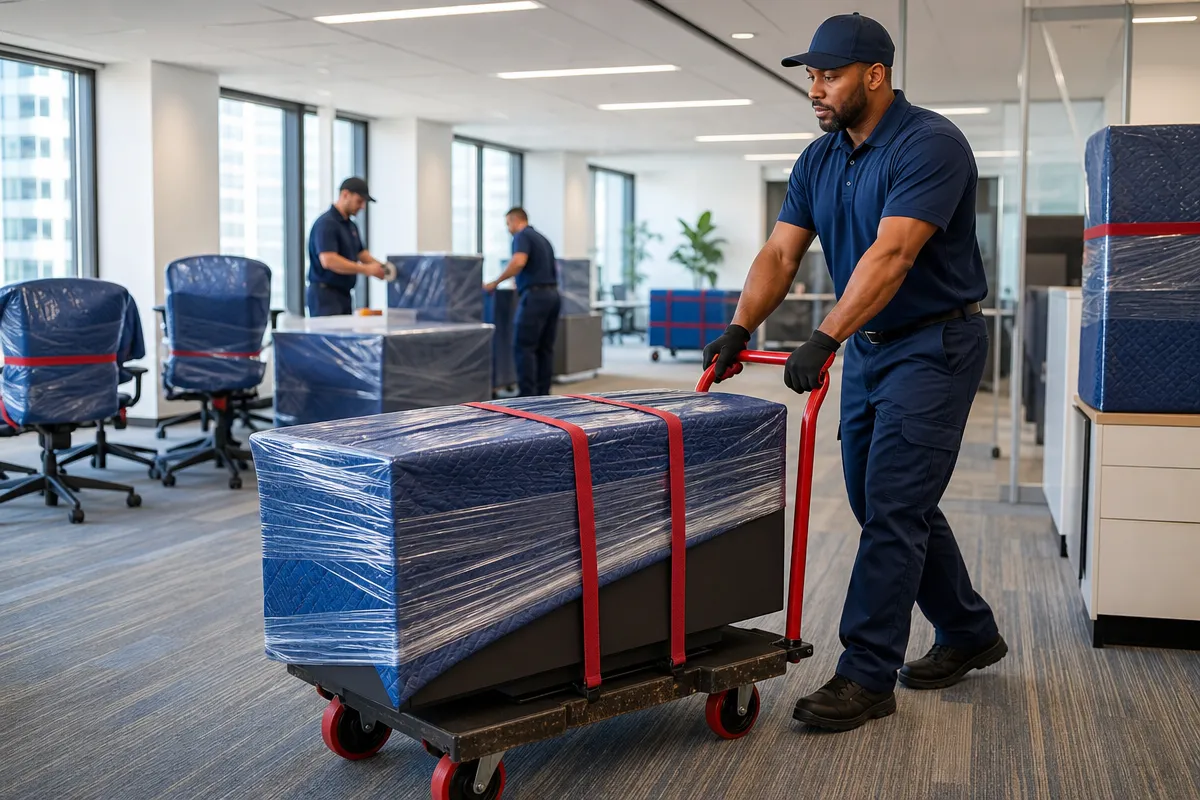
Office furniture removal is rarely just a hauling task. At lease end, during a renovation, or before a workplace downsizing, the project often includes inventory, disassembly, building coordination, reuse decisions, disposal planning, and documentation for the landlord or internal records.
Lease-end office furniture removal starts with the surrender requirements
The first step in a lease-end furniture removal project is reviewing what the lease actually requires. Commercial leases commonly require tenants to return office suites in broom-clean condition, and they may also require removal of furniture, fixtures, cabling, signage, tenant improvements, and other installed items depending on the lease language.
That makes the surrender clause more important than the loading schedule. Before removal begins, the tenant should review restoration language, notice requirements, the handover date, and any landlord or property manager expectations. A useful lease-end plan connects furniture removal with repairs, cleaning, and final inspection instead of treating them as separate afterthoughts.
Common restoration tasks can include patching wall anchors, repairing damaged flooring or ceiling tiles, removing tenant-installed fixtures, and addressing cabling or built-in elements. A pre-move-out walkthrough can help identify issues that might affect final approval or a security deposit.
Photos and written handoff records reduce confusion later
Photograph walls, floors, ceilings, doors, loading routes, and existing damage before work begins. After the furniture and related items are removed, arrange a final walkthrough and keep written acknowledgment that the space was accepted or note any remaining exceptions.
A qualified office furniture removal company should understand how removal, restoration coordination, and landlord inspection fit into one timeline. Clearing desks and chairs without addressing abandoned fixtures, low-voltage cabling, repairs, cleaning, or inspection requirements can leave the tenant exposed to extra charges or avoidable delays.
A detailed inventory guides reuse, storage, resale, donation, and disposal
Inventory is the control point for a commercial furniture removal project. Before crews begin dismantling workstations or loading trucks, the business should know what exists, where it is, who owns it, and what should happen to it.
A complete inventory should include desks, task chairs, modular workstations, conference tables, filing and storage units, partitions, fixtures, appliances, IT equipment, and other assets. Useful records include quantity, dimensions, photos, condition, location, department, owner, and intended destination.
Asset tags or unique reference numbers make the inventory easier to reconcile. This is especially important when furniture is being divided among a new office, multiple company locations, warehouse storage, resale, donation, recycling, and disposal. Multi-location projects benefit from a single tracking system, because the inventory and asset tracking record helps prevent exceptions from getting lost between sites.
The most useful inventory does more than count furniture. It supports operational and financial decisions about whether items should be relocated, stored, resold, donated, recycled, or discarded. Virginia’s state surplus-property process identifies factors such as condition, age, quantity, size, weight, and market demand as relevant to disposition decisions.
Before removal begins, create a shared disposition list that assigns each item to an approved outcome. This list should be easy for facilities, finance, IT, and the moving team to understand. The key is to document both the decision and the destination.
Relocate items that fit the new workplace and are still useful.
Store furniture needed for a future phase, expansion, or delayed decision.
Reuse workstations, chairs, storage, or conference furniture internally when practical.
Resell or liquidate newer, standardized, or in-demand pieces when value may be recovered.
Donate usable items only after confirming the recipient accepts them and can provide a receipt.
Recycle or dispose of items that cannot be reused, sold, or donated.
Safe disassembly and building logistics can shape the removal schedule
Commercial furniture removal often requires more planning than a standard office cleanout. Modular workstations, panel systems, conference tables, shelving, and casegoods may need to be disassembled before they can move safely through corridors, freight elevators, loading docks, and truck staging areas.
The building itself can determine the schedule. Property managers may require freight-elevator reservations, loading-dock appointments, certificates of insurance, security check-in, protective coverings, approved travel paths, truck-size limits, and after-hours or weekend access. These requirements should be confirmed before labor is scheduled.
After-hours work can reduce disruption for employees and neighboring tenants, but it can also affect labor planning and security coordination. The removal team should confirm the access window, elevator dimensions, elevator weight limit, dock rules, truck clearance, parking restrictions, staging limits, and whether building personnel must operate the freight elevator.
RCS supports these details through our commercial moving, warehouse storage, installation, logistics, and related services, which helps businesses coordinate furniture removal as part of the larger project rather than as a disconnected haul-away task.
Crew size depends on more than the number of desks
The right crew size depends on workstation count, furniture weight, disassembly complexity, staging space, elevator cycle time, and the permitted removal window. Oversized items may require alternate routes, extra labor, a liftgate, a shuttle truck, or phased removal.
Building logistics also affect cost. Elevator handling, long carries, shuttle trucks, restricted dock access, limited staging, after-hours labor, weekend work, and required building protection can increase labor or equipment needs. A missed elevator or dock window may cause idle labor, rescheduling, or extended storage.
For that reason, removal estimates should separate major work categories. Ask for line items for disassembly, hauling, storage, resale or donation handling, recycling, disposal, cleaning, wall or floor repairs, cabling removal, elevator or dock fees, and documentation. This makes bids easier to compare and reduces the risk that a low hauling quote excludes work required to complete the lease exit.
Responsible closeout records prove what was removed and where it went
A strong office furniture hauling project should end with more than an empty suite. The closeout file gives the business a record of what happened, where assets went, and what documentation is available if questions arise later.
Closeout records can include the original inventory, asset-tag reconciliation, photographs, destination records, storage receipts, resale documentation, donation receipts, recycling records, disposal receipts, invoices, and final room-by-room clearance confirmation. This documentation can support landlord review, insurance inquiries, internal audits, and sustainability reporting.
Furniture that fits the new workplace should generally be evaluated for relocation or internal reuse before disposal. Refurbishment may extend the useful life of worn but structurally sound items, while storage may make sense for phased renovations, temporary downsizing, consolidation, or uncertain future space needs.
Items that cannot be reused, sold, or donated should be separated into recyclable material streams where practical. In North Carolina, the state prohibits landfilling certain discarded computer equipment, including computers, monitors, printers, scanners, and similar devices, under its items banned from disposal guidance. Electronics, appliances, batteries, and other special materials may require handling that is separate from ordinary desks and chairs.
For data-bearing equipment, furniture removal should be coordinated with secure data sanitization or destruction. A documented chain of custody and certificate of destruction can help demonstrate that retired devices were handled consistently with company security and compliance expectations. Responsible disposition should be demonstrated, not assumed, so ask potential vendors for examples of donation receipts, recycling documentation, disposal records, storage inventories, and final reconciliation reports.
Recycling records should identify the material or equipment, receiving facility or downstream processor, date, quantity when available, and project reference. North Carolina requires facilities that recover or recycle covered devices or other electronics diverted from the waste stream for processing to register annually with the state, according to the state’s electronics recycling registration requirement. In Virginia, regulations define commercial transport as transportation of solid waste or regulated medical waste for commercial carriage, which reinforces the need for qualified vendors and appropriate disposal channels.
If your company needs an office furniture removal company for a lease end, renovation, relocation, downsizing, or multi-location project, RCS Commercial Moving & Warehousing can help coordinate the logistics from inventory through documented closeout. Get a Quote, Call us today at (804) 358-4035, or Email us at contact@rcsmoving.com.