.svg)


.svg)
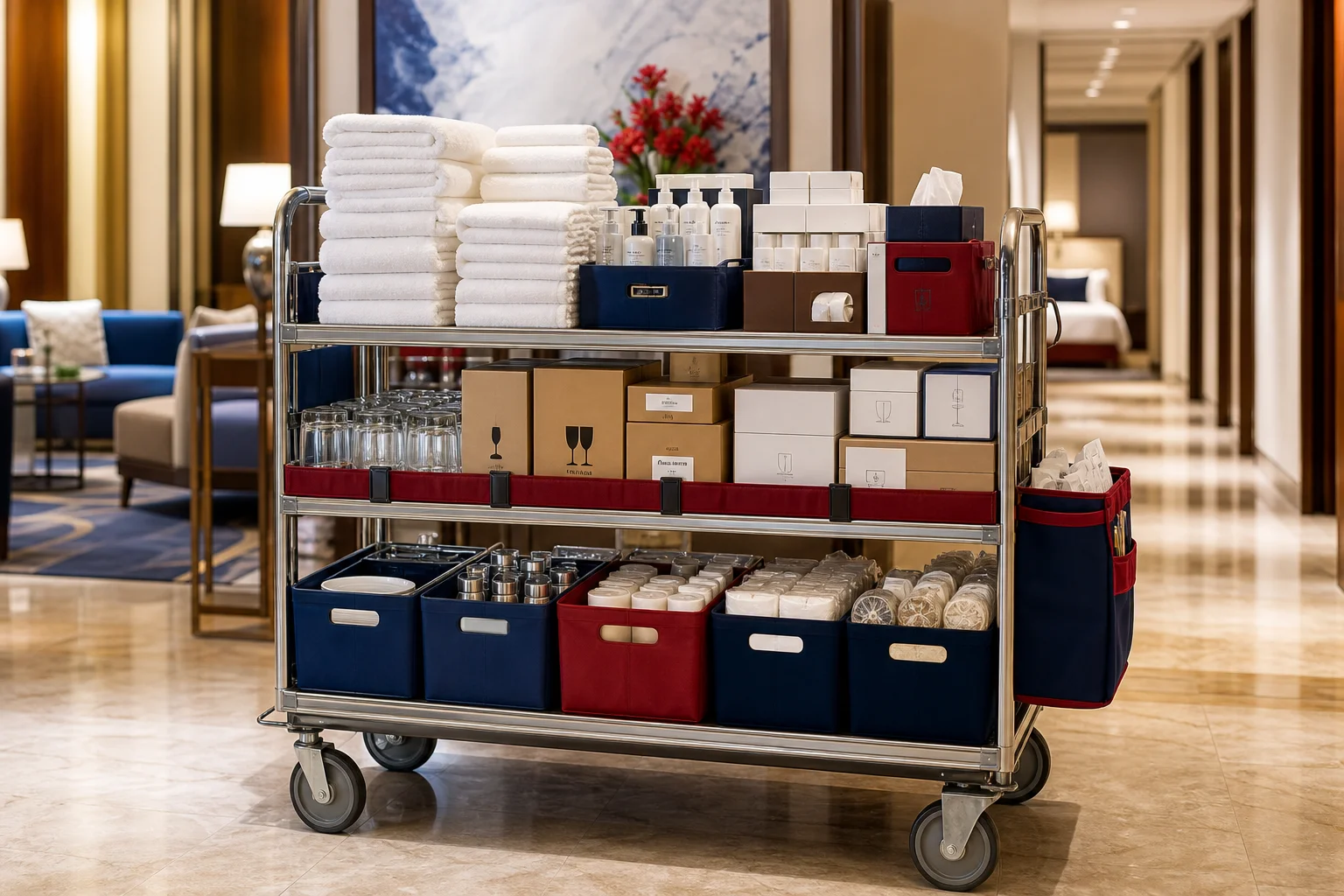
Hospitality OS&E services turn thousands of operating supplies and equipment items into a controlled opening or renovation plan. Linens, towels, tableware, glassware, housekeeping supplies, uniforms, guest amenities, kitchen tools, carts, small appliances, and administrative supplies all need to arrive in the right quantity, in the right condition, and at the right time.
OS&E Logistics Controls the Small Items That Make a Hotel Operate
OS&E means Operating Supplies and Equipment, the movable, consumable, and replaceable items required to run a hotel. These items support guestrooms, housekeeping, food and beverage, front office, engineering, spa, laundry, and back-of-house operations. The category includes everything from towels and amenities to glassware, uniforms, luggage carts, and safety supplies.
The operational challenge is volume. A 200-room hotel may require more than 2,000 OS&E line items, ranging from small bar tools to larger housekeeping carts. That makes OS&E a logistics control issue, not only a purchasing issue.
Procurement teams need to know what was ordered, what shipped, what arrived, what is damaged, what is short, where each item is stored, and when each department can receive it. Without that visibility, small exceptions can become opening-readiness problems.
OS&E Is Different From FF&E in Daily Hotel Readiness
FF&E, or Furniture, Fixtures, and Equipment, generally includes larger, longer-lived assets such as beds, desks, sofas, case goods, lighting, artwork, carpets, and major equipment. FF&E helps create the physical environment of the hotel.
OS&E enables staff to deliver service inside that environment. It is usually smaller, more numerous, more frequently replaced, and more closely tied to daily operating procedures. A missing carton of towels, glasses, hangers, or coffee supplies can affect many rooms even when the overall shipment appears complete.
The distinction is not simply large versus small. OS&E creates transactional complexity because hundreds or thousands of SKUs may be sourced from many suppliers, packed in different quantities, and assigned to different rooms, departments, outlets, or reserve inventories.
High-SKU Receiving Turns Supplier Shipments Into Usable Inventory
Strong OS&E receiving begins before the first truck arrives. The project needs a frozen master list that identifies the item code, description, approved specification, supplier, purchase order, department, quantity basis, par level, carton or packing mark, destination, and required delivery date.
Quantity basis matters because not every item is counted the same way. Some items are required per room, some per floor, some per outlet, some for opening stock, and some for ongoing reserves. Receiving teams need enough detail to reconcile what arrived against what the hotel actually needs.
At the warehouse, inbound freight should be checked against the purchase order and packing list. A practical receiving workflow records supplier, shipment reference, carton count, visible carton condition, SKU, quantity received, storage location, and exceptions such as damage, shortage, substitutions, or unidentified goods.
The best workflows are simple enough to follow but detailed enough to protect the project. They create a clean handoff between procurement, logistics, ownership, and hotel operations. They also make it easier to act quickly when a supplier shipment is not ready for release.
Schedule inbound appointments and match each shipment to the purchase order.
Record cartons, pallets, and visible condition when goods arrive.
Enter or scan the SKU, quantity, supplier, and project allocation.
Compare actual receipts with the packing list and approved master list.
Photograph packaging concerns, visible damage, or irregular contents.
Quarantine damaged, incorrect, substituted, or unidentifiable items.
Assign a warehouse location and room, floor, department, or reserve destination.
Issue exception reports with ownership, action steps, and replacement deadlines.
RCS provides receiving, warehousing, delivery, assembly, placement, room staging, and project coordination for hotel renovations, new construction, and property refreshes. In practice, those services help convert fragmented vendor shipments into organized inventory that can be released when the property is ready.
Warehouse Storage and Staging Reduce Site Congestion During Hotel Projects
A project warehouse absorbs the timing mismatch between supplier deliveries and construction readiness. Hotel sites often cannot safely store a full property’s OS&E inventory, especially when loading docks, elevators, corridors, and work areas are already being used by construction, installation, and operations teams.
Instead of sending every vendor directly to the site, a logistics partner can receive and organize goods off-site. This allows materials from multiple suppliers to be checked, consolidated, labeled, stored, and released later in a controlled sequence.
Storage should be organized by more than vendor name. Useful warehouse structures include project, building or tower, floor, room type, room number, department, outlet, phase, and reserve stock. Cartons should be labeled so the receiving or setup team can quickly understand where each item belongs.
Different OS&E categories also need different handling priorities. Breakable serviceware needs fast count and damage checks. Textiles need clean, dry storage and protection from contamination. Bulky carts and engineering items need accessible floor positions and routes that can accommodate their size. High-value electronics, branded items, and guest-contact products may require restricted access and documented custody.
Exception Inventory Should Never Be Mixed With Approved Stock
Damaged, incorrect, substituted, or incomplete shipments should be placed in a clearly identified quarantine area. This prevents a damaged glass, an unapproved replacement, or an incomplete kit from accidentally reaching a guestroom, restaurant, or department.
Inventory tracking should also show more than received or not received. Procurement and ownership teams need to see whether items are ordered, acknowledged, in production, shipped, inspected, damaged, short, backordered, substituted, quarantined, allocated, staged, released, delivered, and accepted.
A centralized tracker helps prevent the fragmentation that happens when details are spread across emails, spreadsheets, vendor portals, and site notes. It also shows the operational effect of an exception, such as whether a shortage affects one room, a full floor, a restaurant opening, or opening-day reserve stock.
Floor, Room, and Department Releases Support Opening Readiness
Staged delivery should follow the hotel’s readiness, not the supplier’s arrival pattern. The operations, construction, or installation team should confirm that a room block, floor, public area, outlet, or back-of-house department is physically ready before OS&E is released from storage.
Once that readiness signal is confirmed, the warehouse can turn it into a pick list, delivery route, staging sequence, and receiving appointment. This keeps material flowing in phases and reduces the chance that cartons will sit in corridors, block crews, or be moved multiple times.
One precise method is the room-specific kit, sometimes described as room-in-a-box. Each room’s approved OS&E allocation is pre-packed and labeled so housekeeping or setup teams can deliver it directly to the assigned room without sorting mixed cartons on site.
Larger properties may need several release types working together. The right structure depends on how the hotel will open, how construction handover is sequenced, and which departments need early access to supplies. A clear hierarchy helps teams coordinate labor, access, and acceptance.
Department releases for front office, housekeeping, laundry, engineering, spa, or food and beverage.
Public-area or outlet releases for restaurants, bars, meeting rooms, and fitness areas.
Floor or room-block releases for guestrooms.
Room-specific releases for high-control or brand-sensitive items.
Final opening reserve releases for replacement stock and operating contingencies.
A release is not finished simply because a truck arrives. The receiving department should reconcile delivered quantities against the release list, record placement, document visible damage, identify shortages, and sign off or issue a punch-list exception. This creates a defensible handoff from procurement to logistics to hotel operations.
OS&E logistics also reduces risk during renovations and brand conversions. During a renovation, phased delivery can work around occupied areas and store replacement material between work windows. During a conversion, the same control system can separate old-brand inventory, new-brand standards, approved replacements, and surplus assets.
Controlled OS&E Services Help Prevent Opening-Day Gaps
The biggest OS&E risks are often small at the item level but large at the operational level. Shortages, damage, substitutions, backorders, and misplaced cartons can affect rooms, outlets, departments, and opening reserves.
Item-level receiving exposes shortages while replacement options still exist. Warehouse inspection creates an earlier damage claim and replacement point. Quarantine prevents unacceptable items from being distributed. Labeled storage locations, release records, and sign-offs create an audit trail from supplier receipt through final placement.
Many delayed-opening risks come from the combined effect of minor exceptions. A hotel may have most of its inventory on hand but still lack the specific towels, glasses, carts, amenities, or department supplies required to operate smoothly. Coordinated warehousing and staged delivery help stakeholders see what is complete, what is at risk, and what decision is needed next.
For hotel owners, procurement teams, contractors, and operators, the goal is simple: turn a fragmented stream of supplier shipments into operating readiness. The earlier the project controls receiving, storage, inventory, and release planning, the easier it is to protect the opening schedule.
If your hotel project needs commercial storage, receiving, delivery, staging, or installation support, request a quote through our contact page, email us at contact@rcsmoving.com, or call us today at (804) 358-4035.